Commercial Property Resources · 6 min read
What Buyers Should Know Before Purchasing a Commercial Building
By Nunnallee Inspections ·
The Short Answer
Before buying a commercial building, know that inspection scope is negotiated, not fixed. Access must be arranged in advance with tenants and property managers. The roof and mechanical systems can drive the biggest near-term capital costs. Environmental and structural engineering are separate workstreams. Reports on large commercial buildings take longer than the usual 24 hours.
1. You Are Buying an Operating Cost, Not Just an Asset
Commercial buying takes a different mindset. A house is a place you live. A commercial building is a machine with a maintenance schedule, and the inspection is a snapshot of where that machine is in its life.
The roof has a remaining life. So do the rooftop units, the paving, the sealants, the water heater and the panel. The items near the end of theirs are your costs for the first few years.
2. Scope Is Yours to Set
There is no single statewide standard governing commercial inspection scope in Texas, so nobody sets it for you. Describe the decision you are making — acquiring for investment, buying to occupy, evaluating an asset you already hold — and the scope should follow from that. If a proposal arrives without anyone having asked what you are deciding, the scope is a guess.
3. Access Determines What You Actually Learn
The parts of a commercial building that matter most are the locked ones: the roof, the mechanical, electrical and sprinkler riser rooms, and occupied tenant spaces. Tenant notice periods are set by their leases. Arrange all of it before the inspection date, or accept a report on the parts you were least worried about.
4. Look Hard at the Roof and Mechanical Systems
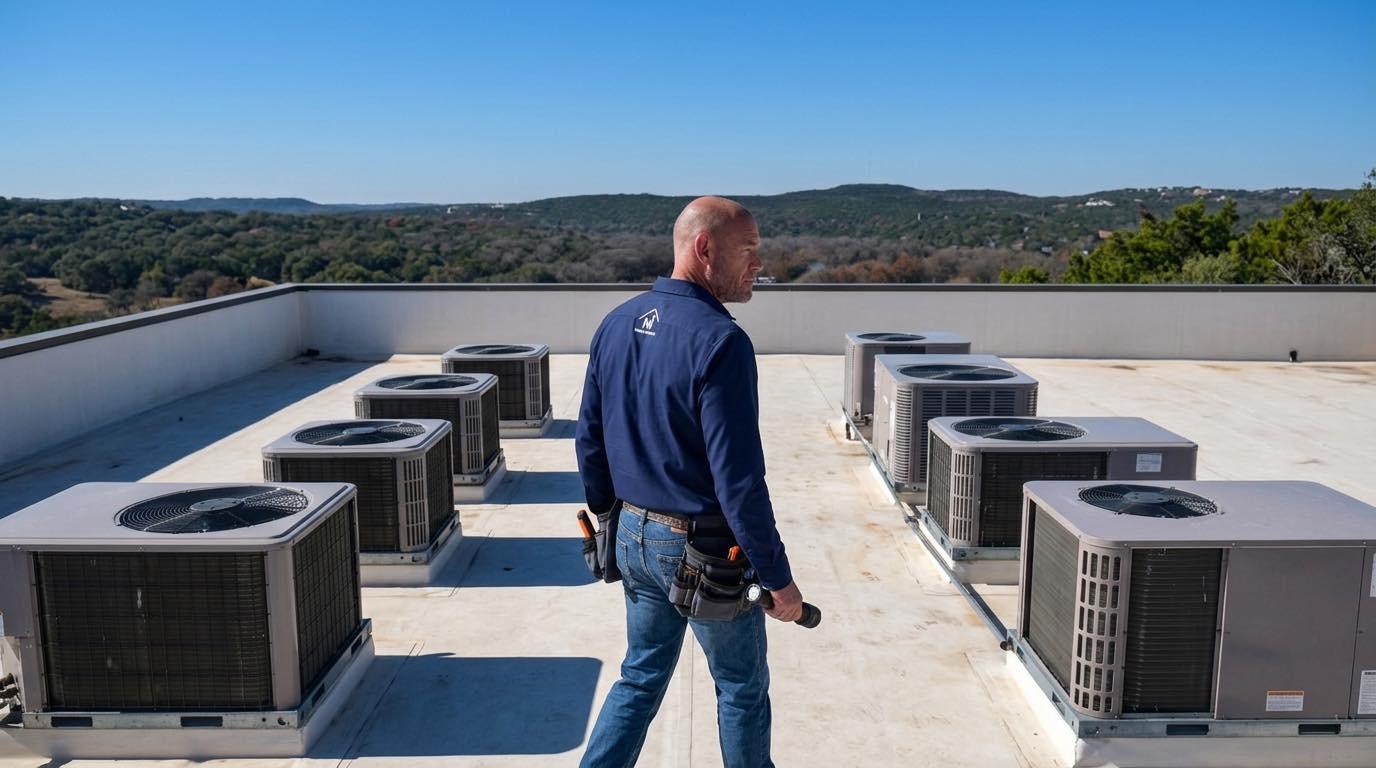
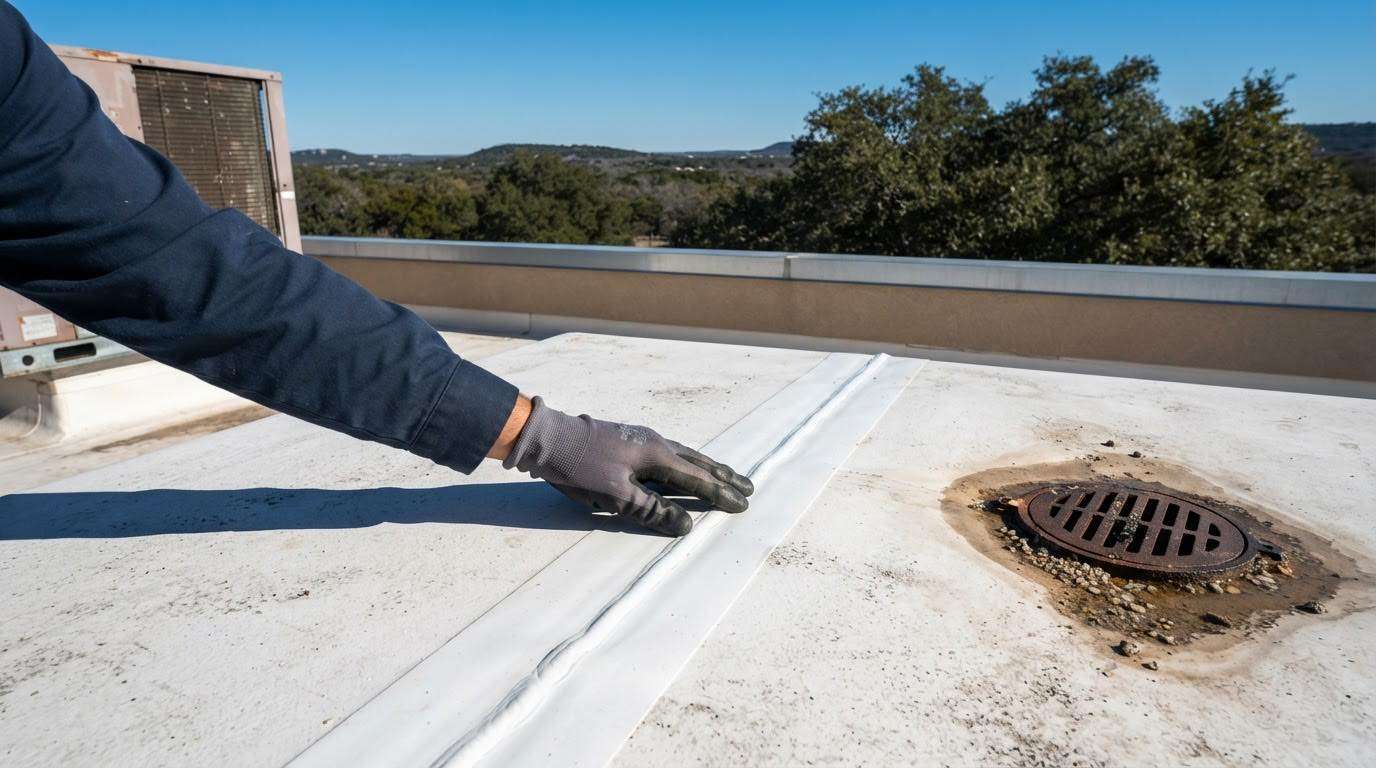
The roof and mechanical systems can dominate near-term capital costs. In Central Texas both are under regional pressure.
Hail history is a standing question on any roof here, and long cooling seasons put sustained load on rooftop equipment. Ask about roof age, prior replacement, evidence of ponding, and the age and condition of each rooftop unit.
5. What the Inspection Does Not Include
- Environmental site assessment (Phase I / Phase II) — a separate discipline
- Structural engineering analysis and load calculations — a separate engagement
- Code compliance certification, zoning and life-safety plan review — separate workstreams
- Specialist system certification for elevators, fire suppression and commercial kitchen equipment
Where a specialist is needed, the report recommends evaluation by one. The inspection is not a substitute for that evaluation, and any provider suggesting otherwise is selling you a comfort you cannot rely on.
6. Independence Is Worth More Here, Not Less
Nunnallee does not perform repair work on the properties it inspects and does not refer repair work. That independence matters on any inspection. On a commercial building, where findings can be expensive, it matters even more.
What to Have Ready
- Property address, type, approximate square footage, year built
- Number of buildings and units
- Occupancy status and how to reach tenants
- Your due-diligence deadline
- Any known specialty systems — commercial kitchen, elevators, fire suppression, walk-in refrigeration, process equipment, solar
- Any documentation the seller has provided on roof age, mechanical replacements or recent capital work
Frequently Asked Questions
How far in advance should I book a commercial inspection?
The day you go under contract. Agreeing on scope and arranging access each take days.
Can you inspect a building that’s occupied?
Yes. Only areas we can get into are inspected, so let us know about tenants, locked spaces and roof access up front.
How much does a commercial inspection cost?
Commercial inspections are scoped and quoted per property, sometimes with more than one scope option. Request a proposal and include your deadline.