Home Inspection Resources · 6 min read
New Construction Inspections in Austin: Why Inspect a Brand-New Home?
By Nunnallee Inspections ·
The Short Answer
A new home should be inspected because municipal inspections and builder walkthroughs aren’t condition reports written for the buyer. Municipal inspectors check code compliance at set construction stages and don’t report to you. The builder’s walkthrough is run by the seller. An independent inspection is done and documented for you, before closing, while you still have leverage.
Three Inspections That Don’t Overlap
A new Austin home can involve three inspections. Each one is done for someone different and answers a different question.
- The municipal inspection verifies code compliance at set stages of construction. It’s a pass/fail check on the code’s schedule, and it produces no condition report for the buyer.
- The builder walkthrough is conducted by the company selling you the house, and its natural focus is finish and cosmetics — the drywall ding, the paint touch-up, the cabinet door.
- An independent home inspection is performed for you by an inspector you hired, to the TREC Standards of Practice, with a documented report that becomes yours.
What Actually Turns up on New Austin Builds
Central Texas builds fast. Volume construction across the metro produces a recognizable and largely mundane set of finish-stage findings:
- Grading and drainage that fall back toward the slab on a freshly finished lot — the single most consequential item on this list, given the soil
- Downspouts terminating at the foundation
- Attic insulation that is incomplete, thin at the eaves, or displaced by whoever was up there last
- Flexible duct that has been crushed, kinked or pulled loose during finish work
- Unsealed penetrations at the building envelope
- Plumbing fixtures and appliances that were installed but never actually run
- Missing or poorly sealed roof flashing at penetrations and wall intersections
None of this is scandalous, and pointing it out is not an accusation against the builder. It is the ordinary consequence of a great many trades passing through one building in a short period. The value of an independent inspection is that somebody who is not on the schedule walks it once, deliberately, on your behalf.
Timing: Before Closing, and Then Again at Month Eleven
Inspect before closing, while you still have leverage to get items fixed.
Then plan a second inspection in month eleven. Most new homes come with a one-year builder warranty. A Central Texas home’s first year covers at least one full wet-dry soil cycle and one full cooling season. Those are the two conditions most likely to reveal what the pre-closing inspection couldn’t.
Phase Inspections During Construction
Some buyers want an inspector at the foundation, framing or pre-drywall stage. Call us with your build schedule and we’ll tell you what’s available.
Add Thermal Imaging If You Can
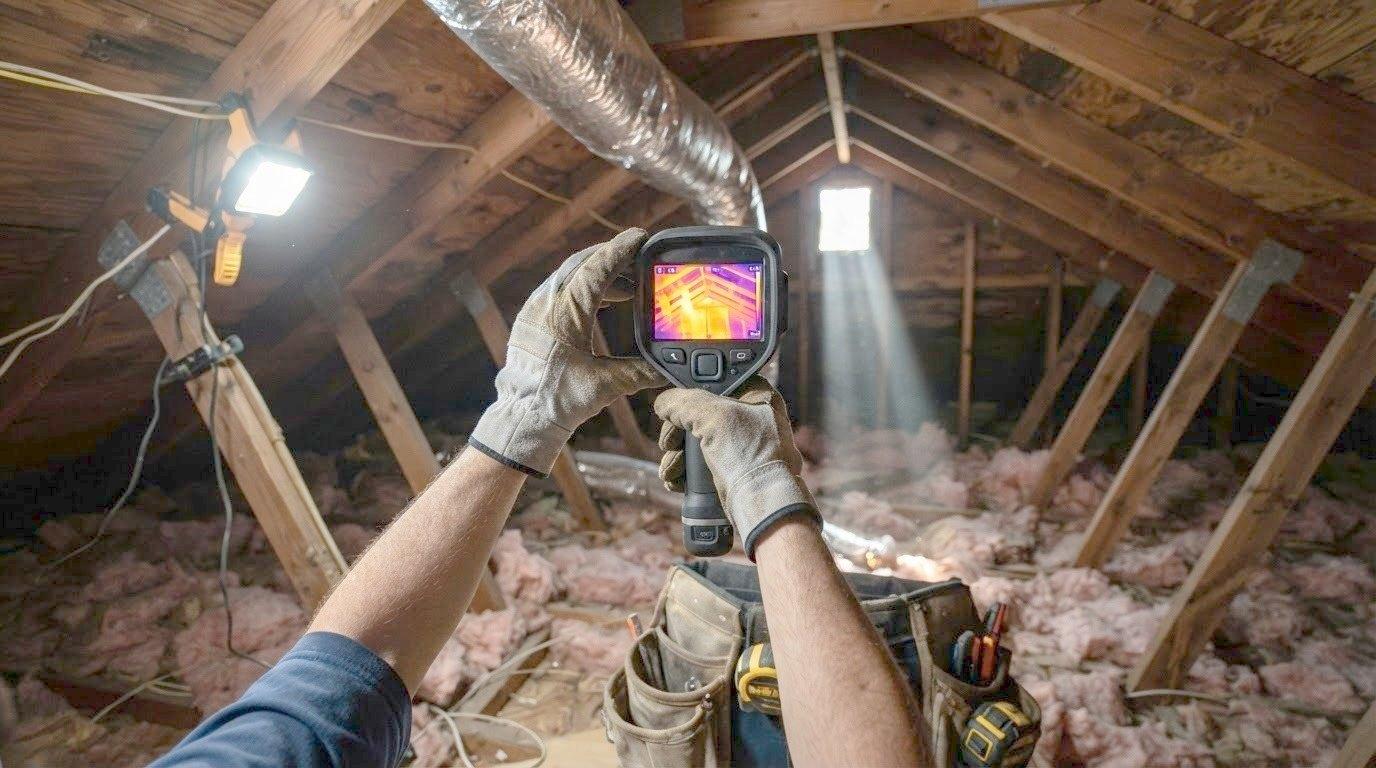
Thermal imaging is especially useful on new construction. Temperature differences across a ceiling can show where insulation or ducts need a closer look. Availability varies, so call to check before you book.
Frequently Asked Questions
What does a new construction inspection cover?
It’s a full home inspection of the finished house, to the TREC Standards of Practice, done for you rather than the builder.
Will the builder be offended?
An independent inspection is a normal step in buying a new home, and the report is about the house, not the builder. A finding documented before closing is simpler to resolve than one raised after it, for the builder too.
Do I still need the 11-month warranty inspection if I inspect before closing?
Yes, for a different reason. The pre-closing inspection records the house as delivered. The 11-month inspection shows what the first year has changed, while the builder’s warranty is still open.